
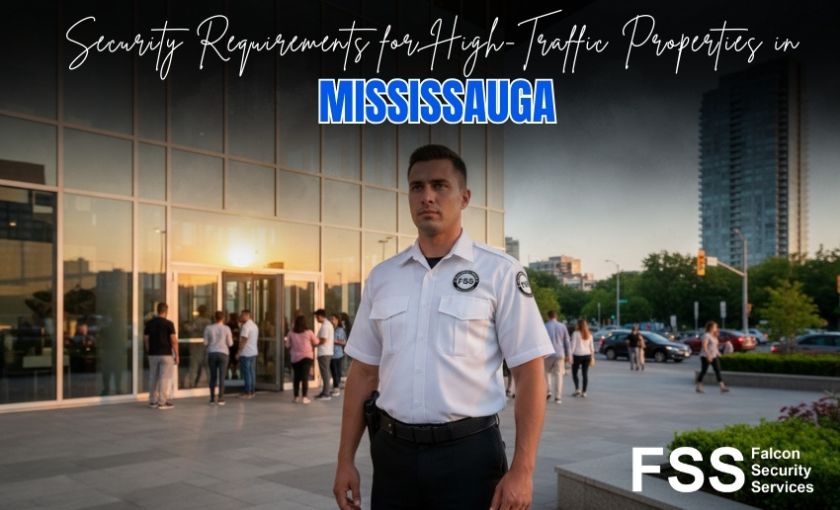
High-traffic properties in Mississauga experience constant movement of people, vehicles, and deliveries throughout the day and night. These locations include shopping centres, office complexes, residential towers, medical facilities, transit-adjacent buildings, and mixed-use developments.
With heavy foot traffic comes increased risk. Theft, unauthorized access, safety incidents, and liability concerns are far more common in busy environments. Relying on basic locks, cameras, or untrained personnel is no longer sufficient.
Professional security services play a critical role in protecting high-traffic properties by maintaining order, preventing incidents, and ensuring a safe experience for everyone on site. Falcon Security Services provides trained and licensed guards who understand the unique challenges of high-traffic properties across Mississauga.
What Defines a High-Traffic Property
A high-traffic property is any location that experiences frequent and continuous movement of people or vehicles.
Examples include:
- Shopping malls and plazas
- Office buildings with multiple tenants
- Condominium towers with shared amenities
- Hospitals and medical clinics
- Educational institutions
- Transit-adjacent properties
- Mixed-use developments
Insight: The higher the traffic volume, the greater the need for structured security controls.
Why High-Traffic Properties Face Higher Security Risks
High traffic creates opportunities for crime and safety incidents that are less common in quieter locations.
Key risk factors include:
- Difficulty tracking who enters and exits
- Increased chance of unauthorized access
- Crowded conditions that conceal suspicious activity
- Higher likelihood of disputes or emergencies
- Greater exposure to liability claims
Result: Without professional security, small issues can escalate quickly in busy environments.
Common Security Threats in High-Traffic Properties
Theft and Shoplifting
- Retail theft increases with foot traffic
- Opportunistic criminals blend into crowds
- Storage areas and delivery zones are vulnerable
Unauthorized Access
- Tailgating at entrances
- Non-residents accessing restricted areas
- Visitors entering staff-only or secured zones
Vandalism and Property Damage
- Graffiti in common areas
- Damage to elevators, washrooms, and amenities
- Costly repairs and downtime
Personal Safety Incidents
- Aggressive behavior or disputes
- Harassment or altercations
- Medical emergencies in crowded spaces
Parking and Vehicle-Related Crimes
- Vehicle theft or break-ins
- Unauthorized parking
- Pedestrian safety risks
Insight: High traffic increases both frequency and complexity of incidents.
Core Security Requirements for High-Traffic Properties
Visible Security Presence
- Uniformed guards deter criminal behavior
- Reassures tenants, customers, and visitors
- Establishes authority and order
Benefit: Many incidents are prevented simply by visible security.
Controlled Access Management
- Monitoring entrances and exits
- Enforcing access policies
- Verifying visitors and contractors
Security guards help:
- Prevent tailgating
- Restrict access to sensitive areas
- Support building management rules
Continuous Patrols
- Interior and exterior patrols
- Monitoring common areas and high-risk zones
- Identifying hazards or suspicious behavior early
Result: Issues are addressed before they escalate.
Crowd Management
High-traffic properties often host:
- Peak-hour congestion
- Events or promotions
- Seasonal surges
Security guards assist by:
- Directing foot traffic
- Preventing overcrowding
- Managing queues and entry points
Emergency Response Readiness
Emergencies occur more often in busy locations.
Security guards are trained to respond to:
- Medical emergencies
- Fire alarms
- Evacuations
- Disturbances or threats
Insight: Immediate on-site response reduces injury and liability.
Why Technology Alone Is Not Enough
Many high-traffic properties rely heavily on technology. While important, technology has limits.
Limitations include:
- Cameras record but do not intervene
- Access systems can be bypassed
- Alarms require human response
Human Oversight Is Essential
Security guards:
- Interpret real-time situations
- Take immediate action
- Communicate with occupants and authorities
Best Practice: Combine trained guards with technology for full coverage.
Legal and Liability Considerations
Property owners have a duty of care to maintain safe premises.
High-traffic environments increase liability exposure due to:
- Slip and fall incidents
- Assault or harassment claims
- Theft or damage claims
Security services help reduce liability by:
- Documenting patrols and incidents
- Enforcing safety protocols
- Demonstrating proactive risk management
Insight: Professional security supports insurance requirements and legal compliance.
Impact on Tenant, Customer, and Visitor Experience
Security directly affects how people feel on your property.
Positive impacts include:
- Increased sense of safety
- Better crowd flow and organization
- Faster response to concerns
- Reduced complaints
Result: A safer property attracts tenants, customers, and long-term occupancy.
Security Needs by Property Type
Commercial and Office Buildings
- Access control for employees and visitors
- After-hours monitoring
- Protection of equipment and data
Retail and Mixed-Use Properties
- Theft prevention
- Crowd management
- Customer safety
Residential High-Rise Buildings
- Controlled access
- Parking security
- Resident safety
Medical and Institutional Properties
- Patient and staff protection
- Incident prevention
- Emergency coordination
Insight: Security strategies must align with property function and traffic patterns.
Importance of 24/7 Coverage for Busy Properties
High-traffic does not stop after business hours.
Risks during off-hours include:
- Reduced staffing
- Lower visibility
- Increased theft or vandalism
24/7 security ensures:
- Continuous monitoring
- Immediate incident response
- Protection during nights, weekends, and holidays
Custom Security Planning for High-Traffic Properties
No two properties are the same. Effective security plans consider:
- Property size and layout
- Peak traffic times
- Risk areas
- Tenant needs
- Budget considerations
Tip: Flexible security plans provide the best protection without overstaffing.
Why Falcon Security Services Is Trusted in Mississauga
Falcon Security Services offers:
- Licensed and trained guards
- Experience with high-traffic environments
- Customized security strategies
- Integration with CCTV and access systems
- 24/7 operational support
Falcon Security is registered, approved, and authorized under the Private Security and Investigative Services Act, ensuring full regulatory compliance.
Conclusion
High-traffic properties in Mississauga face elevated security risks that cannot be managed with basic measures alone. Theft, unauthorized access, safety incidents, and liability concerns increase as foot traffic rises.
Professional security services are essential for:
- Maintaining order in crowded environments
- Preventing crime and disruptions
- Managing access and patrols
- Responding to emergencies
- Protecting property owners from liability
Falcon Security Services delivers reliable and professional protection tailored to the demands of high-traffic properties across Mississauga.
Key Takeaway: High-traffic properties require proactive, visible, and professional security to ensure safety, compliance, and long-term success.
Frequently Asked Questions
Q1.What qualifies as a high-traffic property?
Ans. Any property with frequent movement of people or vehicles, such as malls, offices, or residential towers.
Q2.Why do high-traffic properties need security guards?
Ans. To manage crowds, prevent crime, control access, and respond to emergencies.
Q3.Are cameras enough for busy properties?
Ans. No, cameras need trained personnel to monitor and respond effectively.
Q4.Does security improve customer experience?
Ans. Yes, people feel safer and more comfortable in secure environments.
Q5.Is 24/7 security necessary for high-traffic locations?
Ans. Often yes, since risks exist during all hours.
Q6.How does security reduce liability?
Ans. By preventing incidents and documenting safety measures.
Q7.Can security guards manage emergencies?
Ans. Yes, trained guards respond quickly and coordinate with first responders.
Q8.What areas are most vulnerable in busy properties?
Ans. Entrances, parking areas, loading docks, and common spaces.
Q9.Can security services be customized?
Ans. Yes, plans are tailored to property size, traffic, and risk level.
Q10.Why choose Falcon Security Services in Mississauga?
Ans. Falcon offers trained guards, regulatory compliance, flexible coverage, and proven experience with high-traffic properties.