
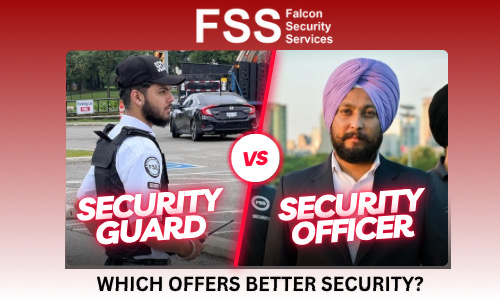
When it comes to protecting your property, people, or assets, choosing the right type of security personnel is critical. Many businesses and property owners struggle to decide between hiring a security guard or a security officer. While both roles are designed to enhance safety and deter threats, they differ significantly in responsibilities, authority, training, and strategic involvement.
Understanding these differences will help you avoid under-securing or over-spending. This guide clearly explains the roles of security guards and security officers, their key differences, and how to determine which option best suits your security needs.
Security Guard vs Security Officer: Quick Comparison
| Factor | Security Guard | Security Officer |
| Primary Role | Monitoring and patrolling | Strategic planning and supervision |
| Training Level | Basic | Advanced |
| Authority | Limited | Higher decision-making authority |
| Best For | Routine security needs | Complex or high-risk environments |
| Cost | More affordable | Higher due to expertise |
This comparison highlights why choosing the right role depends heavily on the complexity and risk level of your environment.
What Is a Security Guard?
A security guard focuses primarily on on-site protection and monitoring. Their role is largely operational, ensuring that a location remains secure through visible presence, routine patrols, and quick response to incidents. Security guards are commonly found in retail stores, residential communities, construction sites, parking facilities, and events.
Responsibilities of a Security Guard
Patrolling and Monitoring
Security guards regularly patrol assigned areas to detect suspicious activity, unauthorized access, or safety hazards. They may conduct foot patrols, vehicle patrols, or monitor CCTV systems.
Visible Deterrence
A uniformed security guard serves as a strong visual deterrent to theft, vandalism, and trespassing. Their presence alone can significantly reduce criminal activity.
Incident Reporting
Guards are trained to observe and report incidents accurately. They document events, notify supervisors, and contact emergency services when required.
Enforcing Safety Protocols
Security guards enforce access control rules, verify visitor credentials, manage entry points, and assist during evacuations or emergencies.
Security guard training usually covers situational awareness, basic emergency response, conflict management, and company-specific procedures. Training requirements vary by region and jurisdiction.
What Is a Security Officer?
A security officer typically operates at a higher level of responsibility. In addition to performing some guard duties, officers are involved in planning, supervision, and risk management. They often oversee security teams and ensure that security operations align with organizational goals.
Responsibilities of a Security Officer
Developing Security Policies
Security officers design and implement security strategies tailored to the environment, including emergency response plans, access control systems, and loss prevention protocols.
Managing Security Personnel
Officers supervise security guards, conduct training sessions, evaluate performance, and ensure compliance with security standards.
Conducting Risk Assessments
Security officers assess vulnerabilities, identify potential threats, and recommend improvements to enhance overall security.
Advanced Surveillance Management
They manage and monitor advanced security technologies such as CCTV systems, alarm systems, biometric access controls, and incident response tools.
Security officers usually undergo advanced training, including leadership development, legal compliance, emergency planning, and security management certifications.
Training and Certification: Key Differences
Security Guard Training
- Focuses on routine security tasks and immediate response
- Includes basic certifications (varies by jurisdiction)
- Prepares guards for on-the-ground monitoring and reporting
Security Officer Training
- Covers advanced risk management and leadership skills
- Includes certifications in security operations and compliance
- Prepares officers for strategic decision-making and supervision
This difference in training reflects the broader responsibilities held by security officers.
Security Guard vs Security Officer: Detailed Comparison
| Aspect | Security Guard | Security Officer |
| Scope of Work | Operational | Strategic and managerial |
| Decision Authority | Limited | Higher-level authority |
| Supervision | Works independently or in teams | Manages guards and operations |
| Risk Management | Reactive | Proactive and analytical |
When to Hire a Security Guard
Hiring a security guard is ideal if you need:
- Continuous on-site monitoring for retail stores, parking lots, or residential properties
- Cost-effective security coverage for low to moderate risk environments
- Visible deterrence against theft, vandalism, or trespassing
- Basic access control and safety enforcement
Security guards are well-suited for environments where physical presence and routine patrols are the primary security requirements.
When to Hire a Security Officer
A security officer is the right choice when:
- You manage high-value assets or sensitive information
- Your environment requires advanced security planning
- You need supervision of multiple guards or large facilities
- Risk assessments and long-term security strategies are essential
Corporate offices, industrial sites, large events, and public facilities often benefit from the expertise of a security officer.
Which Offers Better Security?
Neither role is universally better. The effectiveness of a security guard or security officer depends on your specific security needs.
- Security Guards provide immediate protection, monitoring, and visible deterrence.
- Security Officers deliver strategic oversight, leadership, and proactive risk management.
In many cases, combining both roles creates a layered security approach that delivers comprehensive protection.
Professional security firms like Falcon Security often assess site risks, operational complexity, and budget constraints before recommending the right mix of guards and officers.
Conclusion
Choosing between a security guard and a security officer depends on your risk level, budget, and operational needs. Security guards are ideal for routine protection and visible deterrence, while security officers bring advanced expertise and strategic oversight. Evaluating your environment carefully — or consulting a professional security provider — ensures you select the most effective security solution.
FAQs: Security Guard vs Security Officer
1. Is a security officer higher than a security guard?
Yes. A security officer typically has more authority, advanced training, and supervisory responsibilities.
2. Do security officers have more authority than security guards?
Yes. Security officers can make higher-level decisions and oversee security operations.
3. Can a security guard handle emergencies?
Yes. Guards are trained to respond to emergencies, though complex situations are usually escalated.
4. Is a security officer necessary for high-risk environments?
Not always, but high-risk or high-value environments benefit from an officer’s expertise.
5. Which is more cost-effective: a security guard or a security officer?
Security guards are generally more affordable, while officers cost more due to their skills.
6. Do security officers also perform patrol duties?
Yes, but their primary focus is planning, supervision, and risk management.
7. Can I hire both a security guard and a security officer?
Yes. Many organizations use both for layered security.
8. Are training requirements the same for both roles?
No. Security officers require more advanced training and certifications.
9. Which role is better for business security?
It depends on the complexity of the business and the level of risk involved.
10. How do I decide which one I need?
Assess your budget, risk level, and whether you need basic monitoring or strategic oversight.