
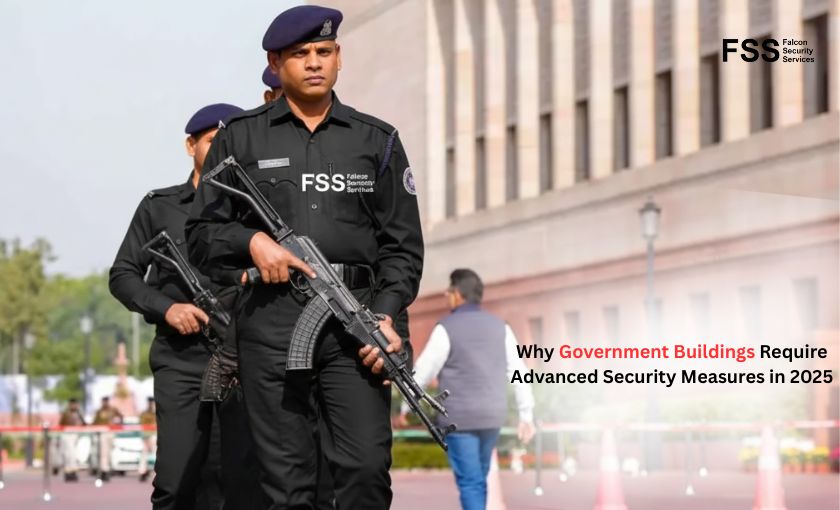
Government buildings across Canada play a crucial role in public administration as they support essential services and hold sensitive information. As threats continue to evolve in 2025, traditional security approaches are no longer enough. Public facilities must rely on advanced protection strategies which safeguard people, property, and digital assets.
Why Threats Against Government Buildings Are Increasing
Government buildings are facing new and more frequent risks. Modern challenges demand upgraded security which keeps pace with rising dangers. These threats include:
• Higher intrusion attempts targeting sensitive information
• Increased public demonstrations which may become unpredictable
• Cybercrime which often overlaps with physical breaches
• Workplace violence that threatens staff safety
• More complex emergency scenarios involving natural or human-made hazards
Since these threats continue to grow, government facilities cannot depend on outdated procedures. They need strong protection which adapts to new risks in real time.
The Importance of Professional Risk Assessment
Before any security plan is implemented, a professional risk assessment is essential. It reveals vulnerabilities which may not be visible during everyday operations. A thorough assessment considers:
• Potential entry points and blind spots
• Critical areas requiring restricted access
• Visitor traffic behaviour
• Emergency response readiness
• Potential insider risks
Falcon Security Services uses detailed assessments to design strategies for each facility, ensuring protection which matches specific site requirements.
Access Control Must Be Stronger Than Before
Government buildings manage thousands of visitors, employees, and contractors. Without proper access control, a facility becomes vulnerable. To strengthen protection, modern systems include:
• Credential-based entry
• Visitor registration checkpoints
• Trained guards monitoring sensitive areas
• Surveillance systems integrated with access logs
These measures help ensure that only authorized individuals can enter restricted zones, creating a safer and more organized environment.
Surveillance Technology Plays a Major Role
Advanced surveillance systems now support government security efforts by capturing detailed visuals and enabling real-time monitoring. Modern features include:
• High-definition cameras with night vision capability
• Motion detection alerts
• Monitoring services that operate continuously
• AI-powered systems capable of recognizing unusual behaviour
When paired with trained security guards, this technology enhances early detection and faster response times.
Physical Presence Remains Essential
Technology is powerful, although it cannot replace the decision-making ability of trained security personnel. Government buildings benefit greatly from professional guards because they:
• Provide immediate intervention when incidents occur
• Support crowd control during events or high-traffic periods
• Assist employees and visitors with directions
• Maintain order in busy public spaces
• Offer clear communication with law enforcement
Falcon Security’s personnel undergo rigorous training which prepares them for public-sector environments and ensures reliable performance in high-pressure situations.
Emergency Preparedness Must Meet Modern Standards
Government buildings must be prepared for a wide range of emergencies since these incidents can escalate quickly if handled poorly. Advanced measures in 2025 include:
• Evacuation planning tested regularly
• Coordination with police, fire departments, and medical responders
• Quick lockdown procedures
• Incident reporting processes
• Trained guards capable of guiding large groups during emergencies
A prepared facility limits damage, reduces risk, and ensures operations can continue following a major incident.
Protecting Sensitive Government Data
Government facilities store confidential information which must remain secure. Unauthorized access can lead to severe legal, financial, and operational consequences. Strong protection includes:
• Secure document storage
• Monitored access to record rooms
• Verified entry for staff with clearance
• Integration of physical security with cybersecurity systems
When sensitive data is protected, public trust is strengthened and risks of breaches decline significantly.
Preventing Insider Threats
Insider threats remain one of the most serious challenges for government buildings because they are harder to detect than external risks. Advanced security focuses on:
• Monitoring unusual staff behaviour
• Strict access logging
• Patrols in less visible areas
• Security training for employees
• Real-time reporting structures
Trained guards can differentiate between normal operational behaviour and suspicious activity which helps prevent internal incidents before they escalate.
Crowds, Protests, and Public Events Require Organized Control
Many government buildings host public events or face gatherings such as protests and administrative activities. Without professional security, these situations may become chaotic. Effective management involves:
• Crowd movement control
• Safe routing for employees and visitors
• Prevention of unauthorized building entry
• Monitoring interactions between groups
• Maintaining calm and ensuring compliance with building policies
Organized control prevents disruption and keeps the environment safe for everyone involved.
Monitoring After Hours Is More Important Than Ever
Government buildings remain vulnerable even when operations pause for the day. After-hours risks include trespassing, theft, property damage, and attempted breaches. Strong nighttime protection requires:
• Mobile patrol units
• Alarm monitoring
• Continuous surveillance feeds
• Routine perimeter checks
• Immediate response capabilities
Since many incidents occur outside regular business hours, 24/7 security coverage is essential.
Advanced Measures Build Public Trust
Citizens expect government buildings to maintain a high level of safety. When security is visible and effective, public confidence grows. Strong security reflects:
• A commitment to safety
• Professionalism within the government facility
• Protection of taxpayer-funded infrastructure
• Respect for visitors and staff
Trust is an important component of public service, and advanced security measures help maintain this trust.
Falcon Security Services: A Partner for Modern Government Protection
Falcon Security Services is approved by the Ministry of Community Safety and Correctional Services which ensures compliance with the Private Security and Investigative Services Act. Their team provides:
• Trained professionals with government experience
• Advanced surveillance and monitoring integration
• Customized access control strategies
• Emergency-ready procedures
• Continuous support for public-sector operations
These capabilities ensure that government facilities remain protected in 2025 and beyond.
Conclusion
Government buildings require advanced security measures because threats in 2025 are more complex, unpredictable, and technologically advanced. Professional guards, improved access control, modern surveillance, and strong emergency procedures work together to create a secure environment. Falcon Security Services offers trusted, effective, and compliant solutions that support all government protection needs.
Frequently Asked Questions
- Why do government buildings need advanced security in 2025?
Because evolving threats demand stronger protection, faster response, and better technology. - What are the most common risks for government facilities?
Intrusions, insider threats, vandalism, data theft, and public disturbances. - How does access control improve safety?
It ensures only authorized individuals reach restricted areas. - Why is surveillance technology important?
It supports early threat detection and continuous monitoring. - Are trained guards necessary for government security?
Yes, they provide judgment, intervention, and human oversight that technology cannot replace. - How do security companies handle emergencies?
Through evacuation planning, coordination with responders, and trained personnel. - Can advanced security protect sensitive government data?
Yes, strong physical protection supports digital security measures. - Why are after-hours patrols essential?
Many incidents occur during the night when buildings are less occupied. - What makes Falcon Security suitable for government facilities?
Rigorous training, compliance, tailored plans, and reliable personnel. - How do advanced systems support public trust?
They create a safe environment which reassures visitors and staff.