
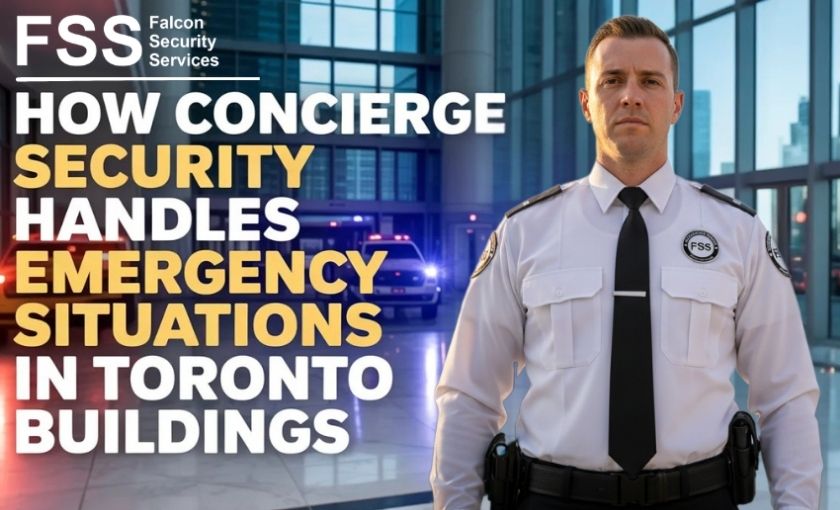
Emergency situations can occur unexpectedly in any residential or commercial building. Fires, medical incidents, power failures, or security threats require immediate attention and coordinated responses. In busy urban environments like Toronto, where many people live or work in high-rise buildings, managing emergencies effectively is essential.
Concierge security guards play a critical role during these situations. Positioned at building entrances and monitoring daily operations, they are often the first individuals available to respond when emergencies occur.
Professional concierge security services help ensure that emergency procedures are followed quickly and efficiently. Falcon Security Services provides licensed and trained concierge guards who assist Toronto buildings with organized emergency response, clear communication, and coordination with emergency services.
Understanding how concierge security handles emergencies highlights why trained security personnel are an essential part of building safety.
The Importance of Immediate Emergency Response
In emergency situations, every minute matters. Quick and organized responses can reduce risks, protect residents, and limit property damage.
Buildings without trained personnel may struggle with:
- Delayed communication with emergency services
- Confusion among residents during evacuations
- Difficulty guiding first responders to the correct location
- Lack of organized incident documentation
Concierge security guards help address these challenges by serving as the first point of response when incidents occur.
Their presence ensures that emergencies are handled in a structured and professional manner.
Monitoring Building Systems and Alerts
Modern Toronto buildings rely on various safety systems designed to detect potential emergencies.
These systems may include:
- Fire alarm systems
- Smoke detectors
- Carbon monoxide alarms
- CCTV monitoring systems
- Access control alerts
- Elevator emergency signals
Concierge security guards often monitor these systems from lobby stations or security desks.
When alerts occur, guards are responsible for:
- Identifying the type of alarm or notification
- Assessing the situation quickly
- Notifying building management
- Contacting emergency services when required
This early detection and response process helps ensure that emergencies are addressed as quickly as possible.
Responding to Fire Alarms
Fire incidents are among the most serious emergencies that can occur in residential or commercial buildings.
When a fire alarm is triggered, concierge security guards follow established procedures designed to protect building occupants.
Typical responsibilities may include:
- Confirming the alarm and identifying its location
- Notifying the fire department if necessary
- Initiating building evacuation procedures
- Directing residents toward safe exits
- Preventing elevator use during fire emergencies
- Assisting emergency responders upon arrival
Because concierge guards are already stationed on-site, they can begin coordinating response efforts immediately.
This structured approach helps ensure residents evacuate safely while emergency responders gain quick access to the building.
Handling Medical Emergencies
Medical emergencies are common in residential buildings, particularly in large condominium communities with diverse resident populations.
Situations may include:
- Sudden illness or injury
- Cardiac emergencies
- Falls in common areas
- Residents requiring urgent medical assistance
Concierge security guards are often the first individuals notified when these incidents occur.
Their role may involve:
- Contacting paramedics or emergency medical services
- Providing basic first aid if trained to do so
- Keeping the surrounding area clear for responders
- Directing paramedics to the resident’s location
Quick assistance during medical emergencies can help ensure that residents receive care as quickly as possible.
Managing Building Evacuations
Certain emergencies require partial or full building evacuations.
These situations may occur during:
- Fire alarms
- Gas leaks
- Structural concerns
- Severe flooding
- Hazardous material incidents
Concierge security guards help coordinate evacuations by:
- Informing residents of evacuation procedures
- Directing occupants to designated exits
- Monitoring building entry points to prevent re-entry
- Communicating with property management and emergency responders
Because large Toronto buildings may house hundreds of residents, organized evacuation procedures are essential.
Trained security personnel help reduce confusion and ensure the process remains orderly.
Coordinating With Emergency Services
Effective emergency response requires cooperation between building staff and public safety agencies.
Concierge security guards serve as a key link between building occupants and emergency responders such as:
- Fire departments
- Paramedics
- Police services
When emergency personnel arrive, guards assist by:
- Providing building access
- Sharing information about the incident
- Directing responders to the correct floor or unit
- Ensuring emergency vehicles have clear entry points
This coordination allows emergency teams to work more efficiently and address the situation quickly.
Managing Security Threats or Disturbances
While many emergencies involve safety hazards, security incidents can also require immediate attention.
Examples include:
- Unauthorized individuals entering the building
- Suspicious behavior in common areas
- Disputes between residents or visitors
- Property damage or attempted theft
Concierge security guards are trained to respond calmly and professionally.
Their responsibilities may include:
- Assessing the situation and ensuring resident safety
- Contacting law enforcement if necessary
- De-escalating conflicts when possible
- Documenting incidents for property management review
Professional handling of these situations helps maintain order and reduce risks for residents.
Communicating With Residents During Emergencies
Clear communication is essential during emergencies.
Residents may feel anxious or uncertain when alarms or incidents occur, especially in large buildings.
Concierge security guards help maintain communication by:
- Providing instructions during evacuations
- Updating residents on the status of incidents
- Relaying messages from property management or emergency responders
- Answering basic questions when possible
Effective communication helps reduce panic and ensures residents follow safety procedures.
Documenting Emergency Incidents
After an emergency situation is resolved, accurate documentation is essential.
Incident reports help property managers understand what occurred and identify areas for improvement.
Concierge security guards typically document:
- The type of emergency
- Time and location of the incident
- Actions taken by security personnel
- Emergency services involved
- Observations relevant to building safety
These reports support insurance claims, risk management, and future safety planning.
Proper documentation also demonstrates that professional procedures were followed during the incident.
Preventive Measures and Emergency Preparedness
Beyond responding to emergencies, concierge security guards also contribute to prevention.
Their daily observations help identify potential safety concerns before they escalate.
Examples include:
- Reporting malfunctioning alarms or safety equipment
- Observing blocked emergency exits
- Identifying hazards in common areas
- Notifying property management of maintenance issues
Regular monitoring helps maintain building safety and ensures emergency systems remain functional.
Preventive actions reduce the likelihood of serious incidents occurring in the first place.
Falcon Security’s Approach to Emergency Response
Falcon Security Services provides concierge guards trained to handle emergency situations in Toronto buildings with professionalism and care.
Key service features include:
- Licensed security personnel compliant with Ontario regulations
- Emergency response training for fire alarms, medical incidents, and evacuations
- Coordination with local emergency services when incidents occur
- Clear communication with residents and property management
- 24/7 availability for buildings requiring continuous security coverage
Falcon Security focuses on preparedness, professionalism, and reliable response during critical situations.
These practices help ensure that Toronto buildings remain safe and well managed.
Outgoing Thoughts
Emergency situations can arise without warning, particularly in large urban buildings where many people live or work. Effective response requires trained personnel who can act quickly, communicate clearly, and coordinate with emergency services.
Concierge security guards play an essential role in managing these situations. From responding to fire alarms and medical emergencies to assisting with evacuations and security incidents, their presence helps ensure that emergencies are handled in a structured and professional manner.
Falcon Security Services supports Toronto buildings with licensed and trained concierge guards who understand the importance of safety, preparedness, and calm decision-making during emergencies.
Key Takeaway
Concierge security is essential for handling emergency situations in Toronto buildings because trained guards provide immediate response, coordinate with emergency services, assist residents, and ensure safety procedures are followed effectively.
FAQs
Q1. What role do concierge guards play during emergencies?
Ans. They respond to alarms, assist residents, contact emergency services, and coordinate safety procedures.
Q2. Do concierge guards handle fire alarms?
Ans. Yes, they help initiate evacuation procedures and assist the fire department upon arrival.
Q3. Can concierge guards assist during medical emergencies?
Ans. Yes, they contact paramedics and may provide basic assistance until help arrives.
Q4. Do concierge guards coordinate with police and firefighters?
Ans. Yes, they guide emergency responders and provide building access.
Q5. Are concierge guards trained for emergency response?
Ans. Professional guards receive training in emergency procedures and incident management.
Q6. Do concierge guards assist with building evacuations?
Ans. Yes, they guide residents toward exits and help maintain order.
Q7. What happens after an emergency incident?
Ans. Security personnel document the event and provide reports to property management.
Q8. Do concierge guards monitor alarm systems?
Ans. Yes, they monitor building safety systems and respond to alerts.
Q9. Are Falcon Security guards licensed in Ontario?
Ans. Yes, all guards meet provincial licensing and training requirements.
Q10. Is concierge security necessary for residential buildings?
Ans. Many Toronto buildings rely on concierge security to ensure organized and professional emergency response.