
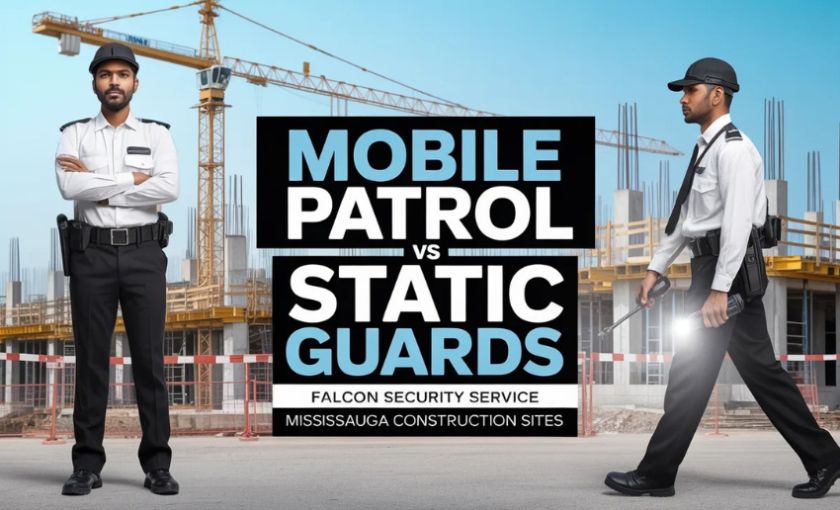
Construction sites in Mississauga face constant security challenges, from theft and vandalism to unauthorized access and safety risks. Choosing the right type of security is essential to protect assets, maintain timelines, and reduce liability.
Two of the most common security approaches are mobile patrol services and static security guards. Each offers unique advantages, and selecting the right option depends on your project’s size, risk level, and operational needs.
Professional providers like Falcon Security Services offer both mobile patrol and static guard solutions, helping builders in Mississauga create customized security strategies that deliver effective protection without unnecessary costs.
This guide explains the differences between mobile patrol and static guards, their benefits, limitations, and how to choose the right option for your construction site.
Understanding Mobile Patrol Security
Mobile patrol involves security guards who move between different areas of a construction site or multiple locations. They conduct inspections at scheduled or random intervals.
Key Features of Mobile Patrol
- Guards travel on foot or by vehicle
- Patrols are conducted at specific times or randomly
- Coverage includes multiple zones or sites
- Inspections focus on identifying risks and vulnerabilities
Mobile patrol is designed to provide broad coverage and flexibility, especially for larger or less active sites.
Understanding Static Security Guards
Static guards are stationed at a fixed location, such as an entry point or security booth. They provide continuous monitoring and control over a specific area.
Key Features of Static Guards
- Assigned to a single location
- Monitor entry and exit points
- Provide constant presence
- Handle access control and visitor verification
Static guards are ideal for sites that require consistent supervision and controlled access.
Key Differences Between Mobile Patrol and Static Guards
Understanding the differences helps determine which option suits your construction project.
Coverage
- Mobile Patrol: Covers large areas and multiple zones
- Static Guards: Focus on a specific location
Visibility
- Mobile Patrol: Intermittent visibility across the site
- Static Guards: Continuous presence in one area
Response Time
- Mobile Patrol: May take time to reach specific areas
- Static Guards: Immediate response within their assigned zone
Cost
- Mobile Patrol: Generally more cost-effective for large sites
- Static Guards: Higher cost due to continuous presence
Both options have strengths, and the best choice depends on site requirements.
Benefits of Mobile Patrol for Construction Sites
Mobile patrol services offer several advantages, particularly for larger or multi-location projects.
1. Wide Area Coverage
Mobile patrols can monitor large construction sites efficiently, ensuring all areas are checked regularly.
2. Cost-Effective Solution
For sites that do not require constant supervision, mobile patrol provides strong security at a lower cost.
3. Unpredictable Patrol Patterns
Random patrol schedules make it difficult for criminals to predict when guards will be present.
4. Early Detection of Issues
Patrols help identify vulnerabilities such as broken fencing, unsecured equipment, or suspicious activity.
5. Flexibility
Mobile patrol can adapt to changing site conditions and cover multiple locations if needed.
Limitations of Mobile Patrol
While mobile patrol is effective, it has some limitations:
- No continuous presence in one area
- Potential delay in responding to incidents
- Limited control over access points
- May not deter determined criminals during gaps between patrols
For high-risk sites, mobile patrol alone may not be sufficient.
Benefits of Static Security Guards
Static guards provide a strong and consistent security presence, making them ideal for high-risk environments.
1. Continuous Monitoring
Static guards remain on-site at all times, ensuring constant supervision.
2. Strong Deterrence
A visible guard presence discourages theft, vandalism, and unauthorized access.
3. Effective Access Control
Guards manage entry and exit points, verifying workers, visitors, and deliveries.
4. Immediate Response
Static guards can respond instantly to incidents within their area.
5. Enhanced Safety
They help enforce safety protocols and prevent unauthorized individuals from entering hazardous zones.
Limitations of Static Guards
Despite their advantages, static guards also have limitations:
- Higher cost compared to mobile patrol
- Limited coverage beyond their assigned area
- May require multiple guards for large sites
For large or complex projects, relying solely on static guards may not provide full coverage.
When to Choose Mobile Patrol
Mobile patrol is best suited for:
- Large construction sites with multiple zones
- Sites with lower risk levels
- Projects in early development stages
- Locations where full-time guards are not required
- Multiple sites that need periodic monitoring
Mobile patrol is an efficient option when flexibility and cost control are priorities.
When to Choose Static Guards
Static guards are ideal for:
- High-value construction sites
- Locations with frequent theft or vandalism
- Sites with heavy traffic and multiple workers
- Projects requiring strict access control
- High-risk areas needing constant supervision
Static guards provide the highest level of on-site security and control.
Combining Mobile Patrol and Static Guards
In many cases, the best solution is a combination of both services.
How a Hybrid Approach Works
- Static guards monitor key access points
- Mobile patrol covers the rest of the site
- Patrols support guards during off-hours
- Security coverage adapts to site conditions
Benefits of a Combined Approach
- Comprehensive site coverage
- Reduced security gaps
- Improved response times
- Balanced cost and effectiveness
This approach provides the strongest protection for most construction projects.
Role of Technology in Supporting Both Services
Modern construction security integrates technology with both mobile patrol and static guards.
Common Tools
- CCTV surveillance systems
- Motion detection lighting
- Alarm systems
- Mobile reporting applications
Technology enhances monitoring, improves communication, and allows faster response to incidents.
Cost Considerations
Budget is an important factor when choosing between mobile patrol and static guards.
Mobile Patrol Costs
- Lower overall cost
- Suitable for sites with moderate risk
- Flexible scheduling options
Static Guard Costs
- Higher due to continuous presence
- Necessary for high-risk or high-value sites
- Provides stronger deterrence
Balancing Cost and Security
The goal is to match the level of security with the level of risk. Investing in the right solution helps avoid costly losses from theft or delays.
Why Falcon Security Services Is the Right Choice
Falcon Security Services offers both mobile patrol and static guard solutions tailored to Mississauga construction sites.
Key Advantages
- Licensed and trained security guards
- Customized security plans based on project needs
- Flexible mobile patrol and static guard options
- 24/7 coverage availability
- Strong communication and reporting systems
- Local expertise in Mississauga construction environments
Falcon Security Services helps builders choose the most effective security strategy for their specific project.
Choosing the Best Option for Your Site
To determine the right approach, consider:
- Size and layout of the site
- Value of equipment and materials
- Level of risk in the area
- Project duration and phase
- Budget and resource allocation
A professional security assessment can help identify the best combination of services.
Key Takeaway
Mobile patrol and static guards each play important roles in protecting Mississauga construction sites. Mobile patrol offers flexible, cost-effective coverage for larger areas, while static guards provide continuous monitoring and strong deterrence at key points. In many cases, a combined approach delivers the best results. Partnering with a professional provider like Falcon Security Services ensures a customized security plan that reduces risks, protects assets, and keeps projects on track.
FAQs
Q1. What is the difference between mobile patrol and static guards?
Ans. Mobile patrol moves across the site, while static guards remain in one location.
Q2. Which option is more cost-effective?
Ans. Mobile patrol is generally more affordable, especially for large sites.
Q3. Are static guards better for high-risk sites?
Ans. Yes, they provide continuous presence and stronger deterrence.
Q4. Can I use both mobile patrol and static guards?
Ans. Yes, combining both provides comprehensive security coverage.
Q5. Do mobile patrols operate at night?
Ans. Yes, they often patrol during off-hours when risks are highest.
Q6. How do static guards control access?
Ans. By verifying identification and monitoring entry and exit points.
Q7. Is mobile patrol enough for construction security?
Ans. It depends on the site’s risk level and size.
Q8. Do guards use technology?
Ans. Yes, they work with CCTV, alarms, and mobile reporting tools.
Q9. How do I choose the right option?
Ans. Consider site size, risk level, and budget.
Q10. Why choose Falcon Security Services?
Ans. They offer flexible, licensed, and customized security solutions in Mississauga.